Key Takeaways
- A broken garage door is not always a candidate for full replacement. Many problems can be repaired safely after a professional inspection.
- Structural damage, repeated repairs, and aging components often make replacement the better long term investment.
- Ignoring a damaged garage door can create safety hazards, increase repair costs, and reduce your home’s security.
- Understanding repair costs, expected lifespan, and the extent of the damage helps homeowners make informed decisions instead of rushed ones.
- Professional inspections from experienced BA Garage Door Services experts focus on identifying the actual issue rather than recommending unnecessary replacements.
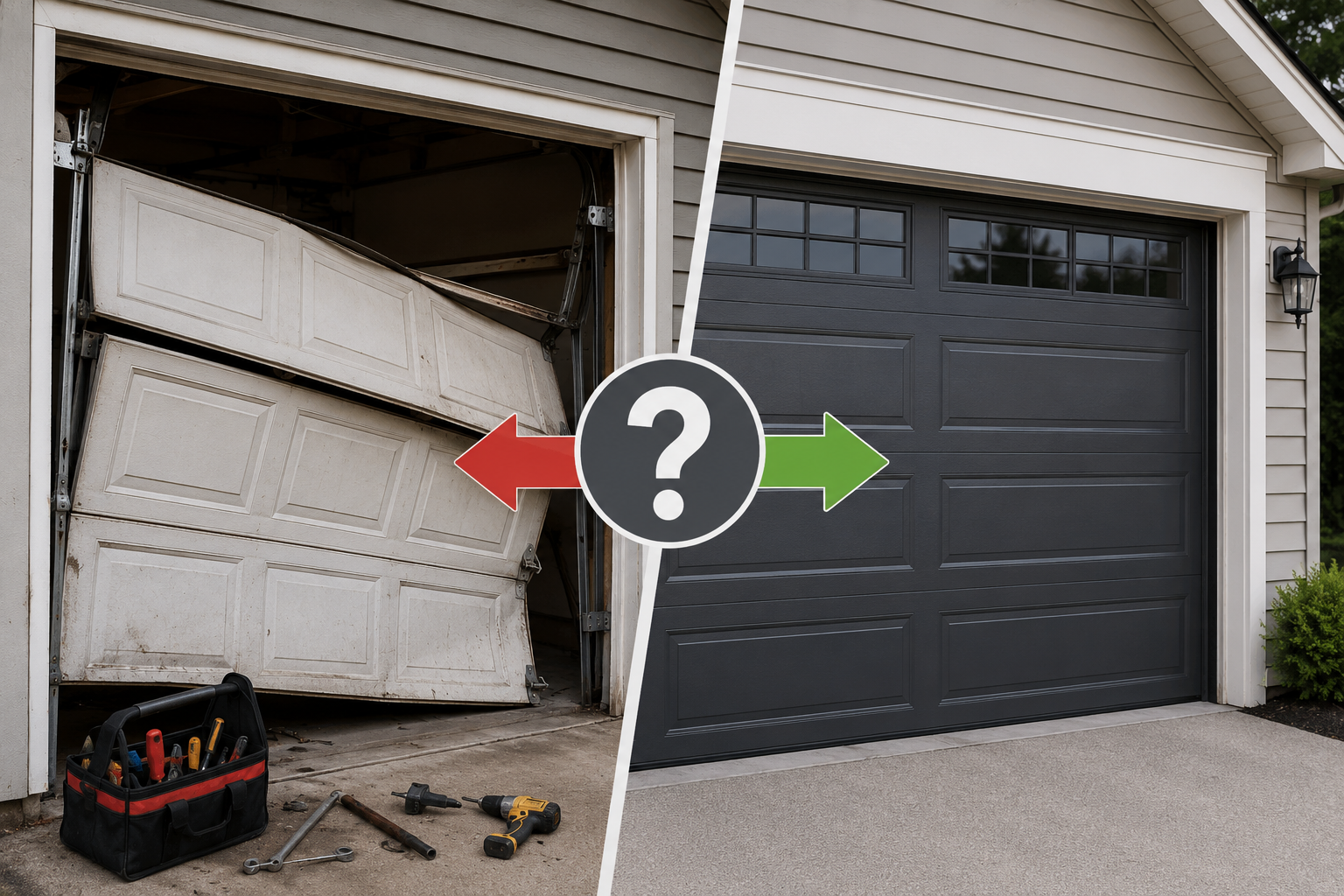
Discovering a broken garage door can quickly disrupt your day. Whether the door refuses to open before work, closes unevenly, or has visible dents after an accident, homeowners are often left wondering whether repair or replacement is the smarter option.
Many garage door problems appear worse than they actually are. In some cases, replacing a broken spring, damaged roller, or misaligned track restores the system without replacing the entire door. Other situations involve structural damage that makes replacement safer and more cost effective over time.
For homeowners in Monroe, understanding the difference can save money while protecting both your family and your property. A trusted garage door company can evaluate the condition of your system and recommend the most practical solution based on its overall safety and performance rather than simply suggesting the most expensive option.
This guide explains how professionals assess garage door damage, what repair costs to expect, when replacement provides better value, and how to make an informed decision.
Why Garage Doors Break
Garage doors operate several times every day. Over the years, constant movement, changing weather, accidental impacts, and worn components gradually affect their performance.
Common causes include:
- Broken torsion or extension springs
- Bent or damaged tracks
- Vehicle impact
- Rust and corrosion
- Worn rollers and hinges
- Frayed lift cables
- Aging garage door panels
- Poor maintenance
Sometimes homeowners simply notice that the garage door broke overnight without any obvious cause. In reality, the system often shows warning signs long before complete failure.
Ignoring those warning signs usually results in more expensive repairs later.
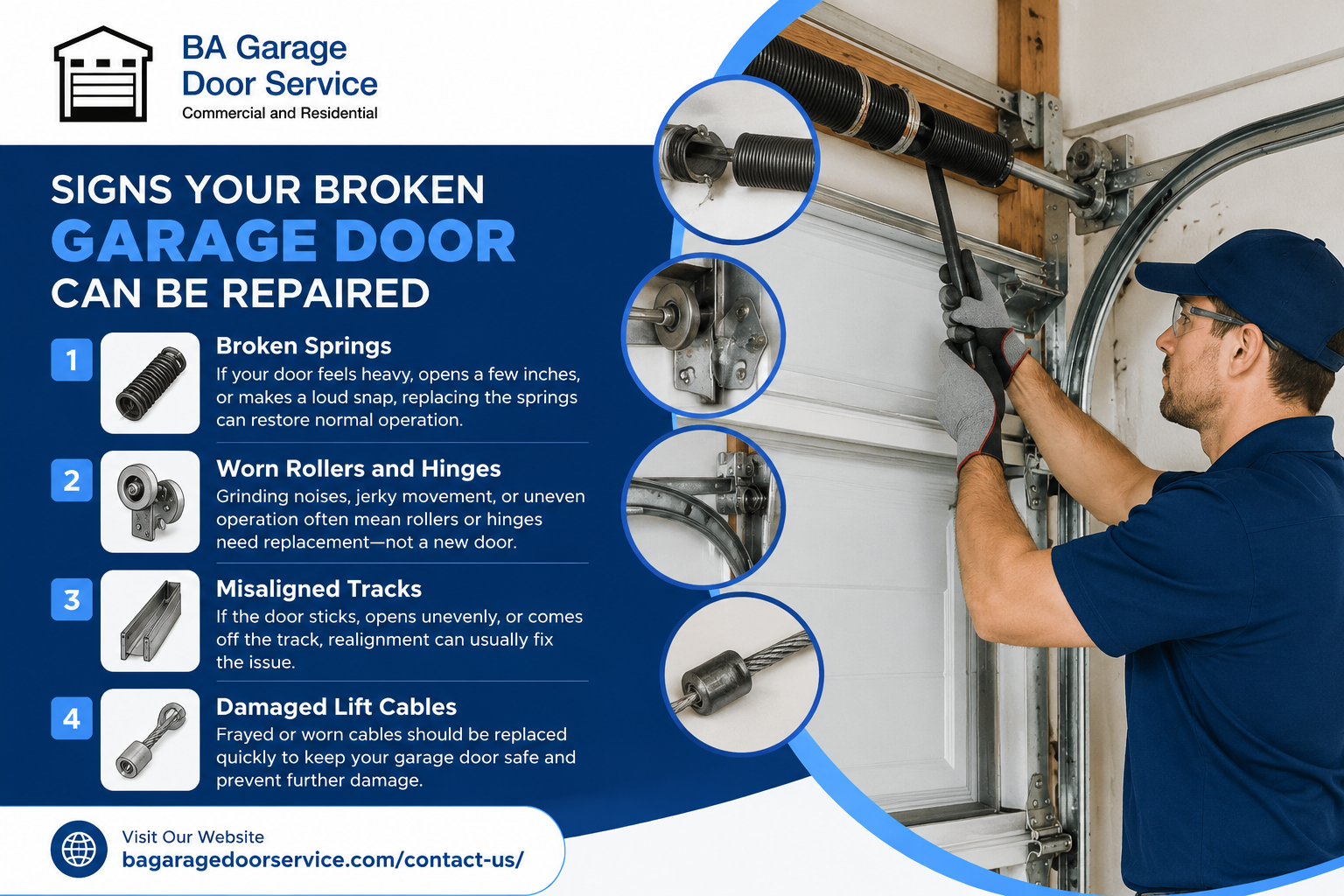
Signs Your Broken Garage Door Can Be Repaired
Not every broken garage door needs to be replaced. A professional inspection can determine whether the door is structurally sound and if the damaged components can be repaired.
1. Broken Springs
Broken springs are one of the most common garage door problems. If your door feels unusually heavy, only opens a few inches, makes a loud snapping noise, or the opener struggles to lift it, replacing the springs is often enough to restore normal operation.
2. Worn Rollers and Hinges
Over time, rollers and hinges wear out due to regular use. Grinding noises, jerky movement, uneven operation, and excessive vibration are common signs that these components need replacement rather than a new garage door.
3. Misaligned Tracks
Tracks can shift because of vibration or minor impacts, causing the door to stick, open unevenly, or come off the track. In most cases, professional realignment can solve the problem without replacing the entire door.
4. Damaged Lift Cables
Frayed or worn lift cables should be replaced as soon as possible. Repairing damaged cables early helps maintain safe operation and prevents additional damage to the garage door system.
When Replacement Is Usually the Better Choice
Some forms of damage extend beyond individual components. Replacement becomes the better investment when repairs cannot restore long term safety or reliability.
1. Severe Structural Damage
If multiple panels are bent, cracked, or twisted, repairing individual sections may not restore proper operation.
Structural damage commonly results from:
- Vehicle collisions
- Falling trees
- Storm damage
- Significant impact
A technician will inspect whether the frame remains square and whether replacement panels are even available.
2. Multiple Major Repairs
Repeated repairs can quickly exceed the value of an older garage door.
Consider replacement when you have recently replaced:
- Springs
- Cables
- Rollers
- Tracks
- Panels
- Opener
Instead of paying for frequent repairs, investing in a newer system often reduces future maintenance expenses.
3. Aging Garage Doors
Most quality garage doors last approximately:
| Garage Door Material | Average Lifespan | Replacement Consideration |
|---|---|---|
| Steel | 20 to 30 years | Replace if extensive rust or structural damage exists |
| Wood | 15 to 30 years | Replace when rot or warping affects operation |
| Aluminum | 20 years | Replace if panels become severely bent |
| Composite | 20 to 30 years | Replace when structural integrity declines |
Older systems may also lack modern safety features and insulation.
4. Extensive Rust or Rot
Surface rust is repairable. However, widespread corrosion weakens the structural strength of steel doors. Similarly, wood rot often spreads internally, making replacement more practical than repeated repairs.
Repair Costs Versus Replacement Costs
One of the most common questions homeowners ask is whether repairing a garage door is more cost-effective than replacing it. The answer depends on the extent of the damage and the condition of the overall system.
- Repair costs are influenced by several factors, including the type of damaged component, the availability of replacement parts, the labor required, the size and material of the door, and whether emergency service is needed.
- Replacement costs depend on the type of garage door you choose, including its material, insulation level, windows, decorative hardware, and the complexity of the installation.
A professional inspection is the best way to determine the most practical option. In many cases, repairing a damaged garage door is significantly more affordable than replacing the entire system, especially when the door is still structurally sound.
Safety Risks of Using a Broken Garage Door
Continuing to use a damaged garage door can create serious safety hazards and may lead to more expensive repairs. If you notice signs of damage, it’s best to have the door inspected as soon as possible.
1. Falling Doors
Broken springs or damaged lift cables can no longer support the weight of the garage door properly. As a result, the door may suddenly slam shut or fall while opening or closing, creating a serious risk of injury to anyone nearby and potentially damaging vehicles or other property.
2. Opener Damage
Garage door openers are designed to guide a properly balanced door, not lift its full weight. When springs or other components fail, the opener is forced to work much harder than intended. Over time, this extra strain can cause the motor, gears, or drive system to wear out prematurely, leading to costly repairs or replacement.
3. Property Damage
A malfunctioning garage door may close unevenly, come off its tracks, or fail to stop when it encounters an obstruction. This can result in damage to parked vehicles, stored belongings, garage walls, flooring, or other items inside and around the garage. Prompt repairs can help prevent these avoidable expenses.
4. Personal Injury
Garage doors typically weigh between 100 and 300 pounds and rely on high-tension springs and cables to operate safely. Attempting to repair these components without the proper tools or training can result in severe injuries from falling doors, snapping springs, or broken cables. For safety, repairs involving these parts should always be handled by a qualified garage door technician.
How Professionals Diagnose Broken Garage Doors
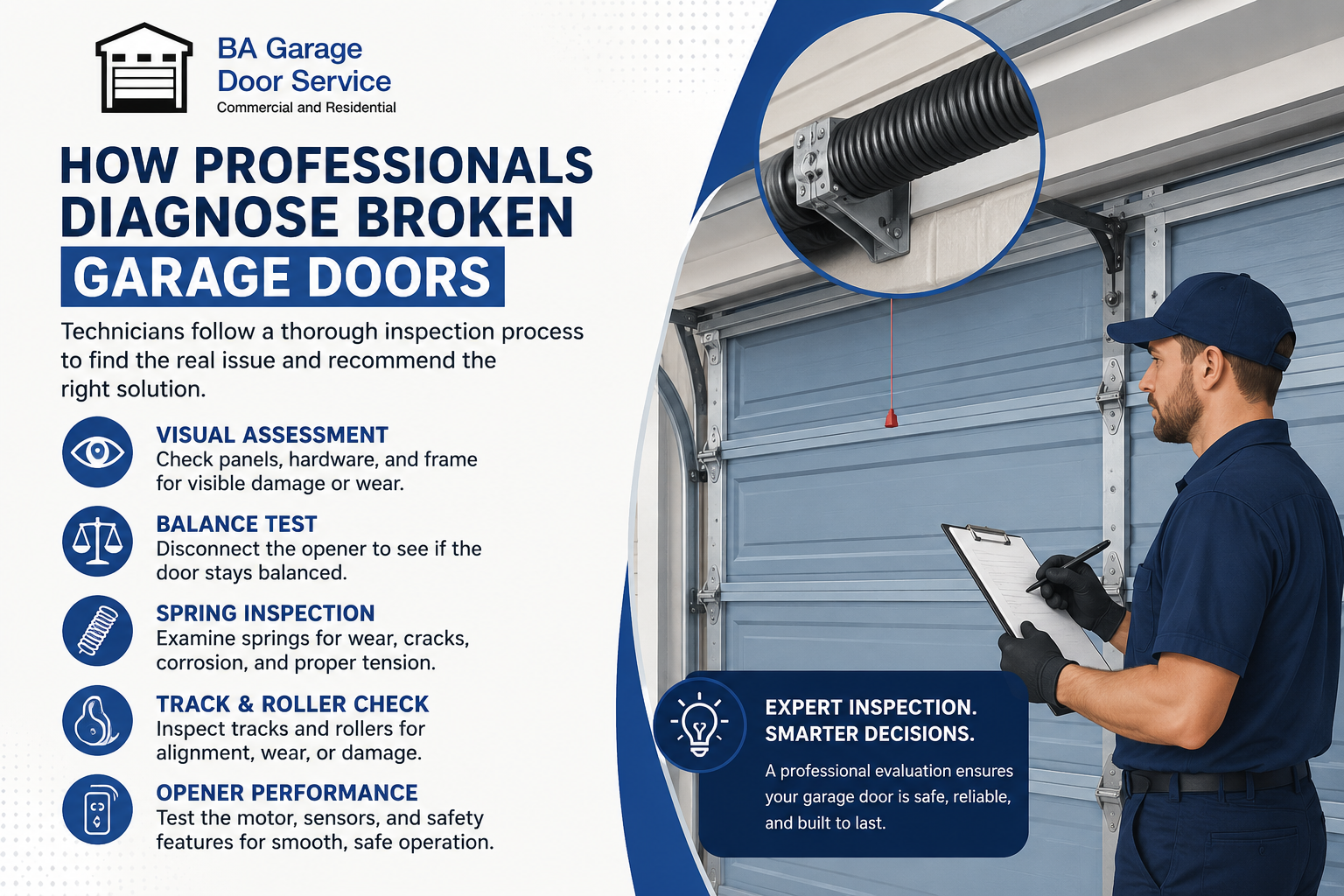
Experienced garage door technicians perform a thorough inspection before recommending whether a repair or full replacement is the best solution. This helps identify the root cause of the problem and ensures no underlying issues are overlooked.
1. Visual Assessment
The technician begins by inspecting the entire garage door for visible signs of damage, such as bent panels, rust, cracks, loose hardware, or frame damage that could affect the door’s performance or safety.
2. Balance Test
The garage door opener is disconnected to check whether the springs properly support the weight of the door. A door that is difficult to lift or does not stay in place often indicates worn or broken springs.
3. Spring Inspection
Technicians examine the torsion or extension springs for signs of wear, cracks, corrosion, proper tension, and their remaining service life to determine whether replacement is necessary.
4. Track and Roller Inspection
The tracks and rollers are checked for bending, misalignment, separation, excessive wear, or damage that could prevent the door from opening and closing smoothly.
5. Opener Performance Check
Finally, the garage door opener is tested to evaluate the motor, travel limits, safety sensors, force settings, and overall operation to ensure it functions safely with the door.
Professional garage door technicians focus on identifying the true source of the problem before recommending repairs or replacement, helping homeowners make informed decisions based on the overall condition of the system.
How Residential Garage Door Installation Can Add Long Term Value
When replacement becomes necessary, modern systems offer more than simply restoring functionality. Many homeowners choose residential garage door installation because newer doors provide:
- Improved insulation
- Better weather sealing
- Quieter operation
- Enhanced security
- Lower maintenance requirements
- Updated curb appeal
Modern doors are also designed to work efficiently with current garage door openers and advanced safety systems.
Questions to Ask Before Choosing Repair or Replacement
Before deciding whether to repair or replace your garage door, consider these important questions:
1. Is the damage limited to one component?
If only a single part, such as a spring, cable, roller, or hinge, is damaged, repairing the door is often the most practical and cost-effective solution.
2. How old is the garage door?
Older garage doors may experience more frequent problems, and replacement parts can become harder to find. The age of the door is an important factor when weighing repair versus replacement.
3. Have repairs become frequent?
If your garage door requires regular repairs, the ongoing costs can add up. In these cases, replacing the entire system may provide better long-term value.
4. Is the door still structurally sound?
A professional inspection can determine whether the door’s frame, panels, and supporting components are safe. If the structure is intact, repairs may be all that’s needed.
5. Will a replacement improve efficiency?
Modern garage doors often include better insulation, weather sealing, and improved durability. Replacing an older door can enhance energy efficiency, reduce maintenance, and improve overall performance.
Why Timely Repairs Matter
Delaying garage door repairs can allow small issues to become more serious and expensive over time. Worn or damaged components often place extra stress on the rest of the system, increasing the likelihood of additional failures.
For example, broken rollers can accelerate track wear, weak springs force the garage door opener to work harder, bent tracks can damage rollers and affect smooth operation, and loose hinges may place unnecessary stress on the door panels. Addressing these problems early can help extend the life of your garage door and prevent a minor repair from turning into a costly replacement.
If replacement is recommended, planning a professional garage door installation Monroe project before total failure helps homeowners avoid emergency situations and unexpected inconvenience.
Conclusion
A broken garage door does not automatically mean you need a completely new system. Many issues involving springs, rollers, tracks, and cables can be repaired safely when diagnosed early by experienced professionals. However, severe structural damage, repeated breakdowns, and aging doors often make replacement the better long term investment.
The most important step is obtaining a thorough inspection that evaluates the entire garage door system rather than focusing on a single visible problem. BA Garage Door Services believes homeowners should understand all available options before making a decision. Whether your goal is repairing a damaged component or considering a new installation, getting expert guidance helps ensure the safest and most cost effective outcome.
If your garage door has stopped working properly or you are unsure whether repair or replacement is the right choice, get in touch with us to schedule a professional inspection and receive recommendations based on the actual condition of your garage door.