Key Takeaways
- Garage door cables support the weight of the door and work together with the springs to ensure safe movement.
- Frayed, rusted, stretched, or loose cables should never be ignored because they can fail without warning.
- DIY cable repairs can be dangerous due to the extreme tension stored in garage door springs.
- Regular maintenance and inspections help identify wear before cables break completely.
- Professional cable replacement often prevents additional damage to springs, tracks, rollers, and openers.
Garage door cables are one of the most important safety components in any garage door system. While homeowners often pay attention to the opener or springs, the cables quietly perform the heavy lifting every day. Ignoring worn or damaged cables can result in an uneven door, unexpected breakdowns, or even serious safety hazards.
Whether you are researching replacing garage door cables after noticing a problem or simply want to understand how long they should last, this guide explains everything you need to know. You’ll learn how cables work, the most common warning signs, why cable failures happen, and why professional service is often the safest solution.
If your garage door is becoming noisy, uneven, or difficult to operate, it is also a good time to inspect the entire system. A qualified garage door company can evaluate the cables, springs, rollers, and tracks together to prevent more expensive repairs later.
Understanding Garage Door Cables
Garage door cables are heavy-duty steel wires that support the weight of the door while working together with the torsion or extension spring system. They help carry the door’s load, maintain balanced movement, and ensure smooth opening and closing. Properly functioning cables keep both sides of the door moving evenly, reduce strain on the opener and other components, and improve overall safety.
Since garage door cables handle thousands of operating cycles over their lifespan, normal wear and tear is expected. Regular inspections can help identify signs of damage and determine when replacing garage door cables is needed to prevent unexpected failures.
Types of Garage Door Cables
| Cable Type | Purpose | Common Location | Replacement Frequency |
|---|---|---|---|
| Torsion cables | Lift doors using torsion springs | Residential garages | When worn or damaged |
| Extension spring cables | Assist extension spring systems | Older garage doors | As required after inspection |
| Garage door tension cable | Maintains proper lifting tension | Both sides of the door | Replace when frayed or stretched |
| Garage door spring cables | Connect spring system during operation | Spring assemblies | During cable or spring service |
Each cable performs a specific function. Using incorrect cable sizes or installing them improperly may reduce the safety of the entire garage door system.
Common Signs Your Garage Door Cables Need Repair or Replacement
Garage door cables show warning signs before complete failure. Recognizing these issues early can help prevent additional damage and improve safety.
1. Frayed Cable Strands
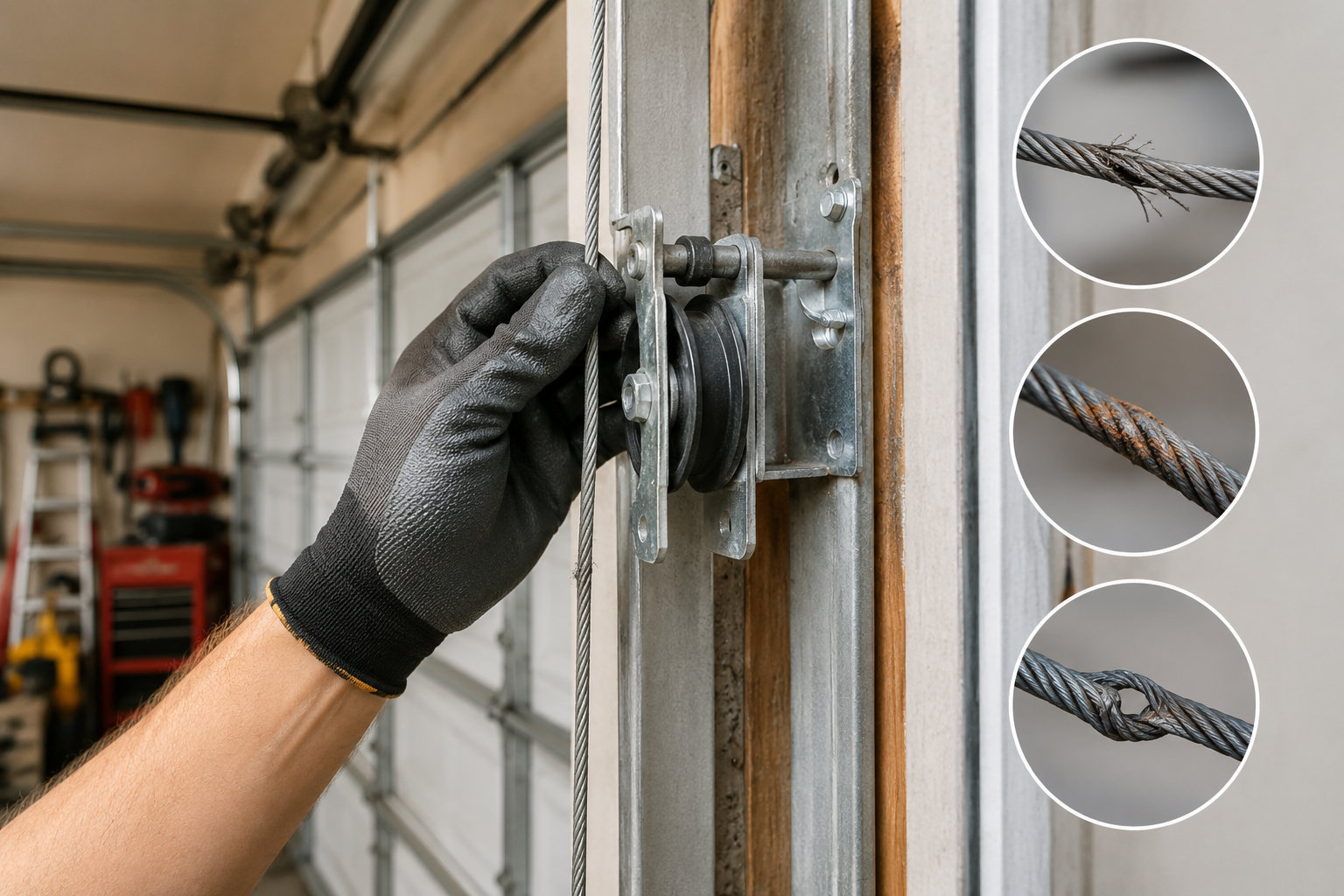
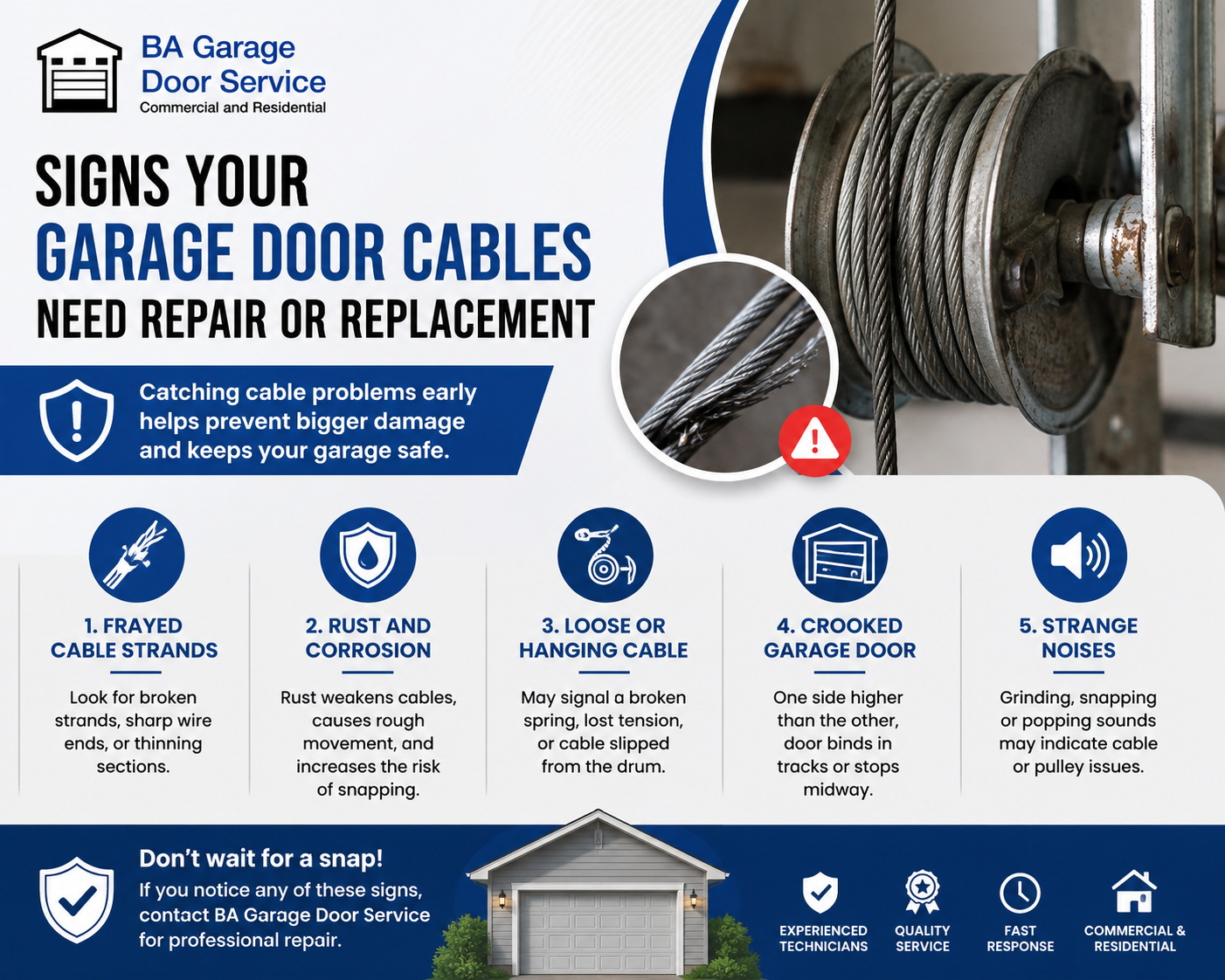
Visible fraying is one of the earliest signs of cable damage. Look for broken steel strands, sharp wire ends, thinner sections, or loose cable wrapping. While many homeowners search for how to repair garage door cable, damaged steel strands usually cannot be safely repaired. Replacing the cable is often the safer and more reliable solution.
2. Rust and Corrosion
Exposure to moisture, humidity, and temperature changes can cause garage door cables to rust over time. Corrosion weakens the cable, creates rough movement, speeds up wear, and increases the risk of snapping. Regular maintenance may slow corrosion, but it cannot restore cables that are already damaged.
3. Loose or Hanging Cable
A loose cable on a garage door often indicates a more serious problem, such as a broken spring, cable slipping from the drum, improper tension, or pulley damage. Although some homeowners search how to reattach garage door cable, the process involves handling high spring tension and should only be performed with proper tools and experience.
4. Crooked Garage Door
When one cable becomes stretched or damaged, the garage door may lift unevenly. Signs include one side sitting higher than the other, the door binding in the tracks, extra strain on the opener, or the door stopping halfway. Forcing an uneven door open can cause further damage to the system.
5. Strange Noises During Operation
Grinding, snapping, scraping, or popping sounds may indicate cable problems or related component issues. These noises can be caused by frayed cables, damaged pulleys, misaligned drums, or worn rollers. Ignoring unusual sounds can allow minor wear to develop into a larger and more expensive repair.
Understanding Garage Door Tension Cables
The garage door tension cable is engineered to withstand significant force during every operating cycle. Unlike ordinary steel wire, these cables are designed specifically for garage door systems. Their responsibilities include:
- Maintaining balance
- Supporting spring operation
- Preventing uneven movement
- Helping control lifting speed
Because they operate under high tension, cable replacement should only be completed after the spring tension has been safely released.
Why Garage Door Cables Fail
Several factors contribute to cable failure.
- Age: Most residential cables eventually wear after years of repeated opening and closing.
- Lack of Maintenance: Without regular inspection and lubrication, small defects worsen much faster.
- Moisture Exposure: Rust weakens steel strands and increases friction.
- Spring Problems: Broken springs place abnormal stress on cables.
If your door also requires garage spring replacement, replacing both worn springs and cables together often restores proper balance while reducing future repair costs.
Can You Repair Garage Door Cables Yourself?
Many homeowners search online for:
- how to repair a garage door cable
- how to fix garage door cables
- how to fix a garage door cable
- how to replace garage door cables
- how to change garage door cables
Although these searches are common, garage door cable repairs involve significant safety risks.
The cables remain connected to springs storing hundreds of pounds of tension. Incorrect handling can result in sudden cable release, spring movement, or severe injury.
For this reason, manufacturers generally recommend professional replacement rather than DIY repairs.
Preventive Maintenance Schedule
Routine inspections greatly reduce unexpected failures.
| Maintenance Frequency | What to Check | Purpose |
|---|---|---|
| Monthly Inspection | Check for fraying, rust, loose cable sections, and uneven cable tension | Helps identify early signs of cable damage before failure occurs |
| Every Six Months | Inspect rollers, hinges, tracks, and cable drums. Lubricate moving metal parts as recommended | Reduces wear and keeps components operating smoothly |
| Annual Professional Inspection | Check cable tension, spring balance, track alignment, and opener performance | Detects hidden issues and prevents costly repairs or unexpected breakdowns |
When Should Garage Door Cables Be Replaced?
Replacement becomes necessary if you notice:
- Broken strands
- Heavy corrosion
- Bent cable ends
- Cable slipping off drums
- Door lifting unevenly
- Broken springs
- Excessive stretching
Attempting garage door cables repair instead of replacement may only provide a temporary solution if the cable has already weakened.
How Cable Problems Affect Other Garage Door Components
Ignoring damaged garage door cables can create problems throughout the entire system. Since cables work together with springs, openers, tracks, rollers, and panels, a small cable issue can lead to additional wear and costly repairs.
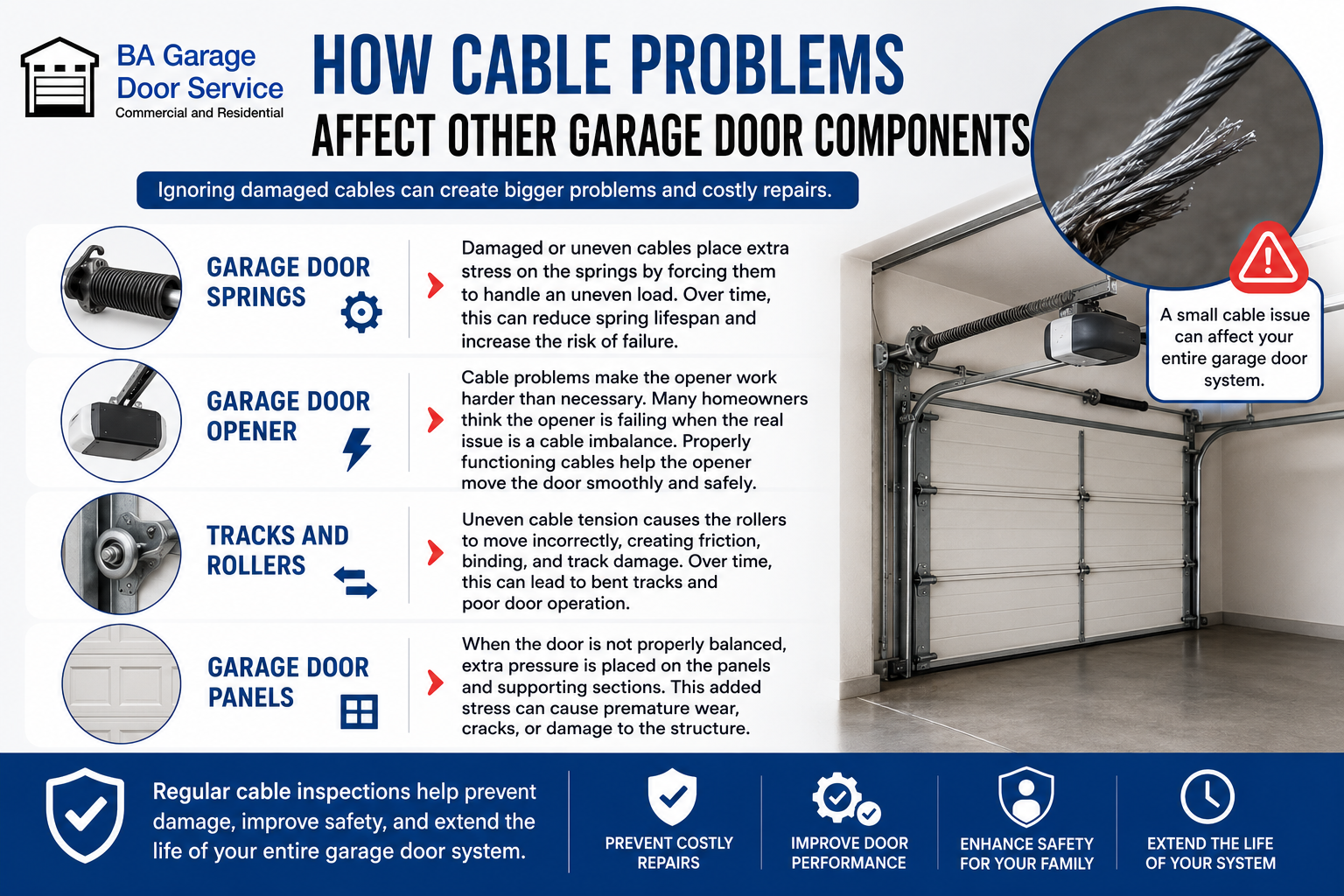
- Garage Door Springs: Damaged or uneven cables can place extra stress on the springs by forcing them to handle an uneven load. Over time, this can reduce spring lifespan and increase the risk of failure.
- Garage Door Opener: Cable problems can make the opener work harder than necessary. Many homeowners assume the opener is failing when the actual issue is a cable imbalance. Properly functioning cables help the opener move the door smoothly and safely.
- Tracks and Rollers: Uneven cable tension can cause the rollers to move incorrectly, creating friction, binding, and track damage. Over time, this can lead to bent tracks and poor door operation.
- Garage Door Panels: When the door is not properly balanced, extra pressure is placed on the panels and supporting sections. This added stress can cause premature wear, cracks, or damage to the garage door structure. Regular cable inspections help prevent these issues from spreading to other components.
Garage Door Safety Tips Every Homeowner Should Follow
Following basic safety practices helps reduce the risk of sudden failures.
- Never operate a visibly damaged garage door.
- Avoid touching loose or broken cables.
- Schedule inspections when the door becomes noisy or uneven.
- Replace worn springs and cables together whenever recommended.
- Never loosen spring hardware without proper training and equipment.
Some extension spring systems also include garage door springs safety cables, which help contain broken springs during failure. These safety cables should be inspected regularly as part of routine maintenance.
Choosing the Right Replacement Garage Door Cables
When replacing cables, professionals consider several factors:
- Door weight
- Spring type
- Cable diameter
- Cable length
- Drum compatibility
- Cycle rating
Using incorrect replacement garage door cables can reduce lifting performance and increase stress throughout the system. Homeowners planning a residential garage door installation should also ensure that all cables, springs, and hardware are correctly matched to the new door.
When Professional Replacement Is the Best Option
Professional technicians have specialized tools to safely manage spring tension while replacing cables.
They also inspect:
- Spring balance
- Roller condition
- Cable drums
- Track alignment
- Door balance
- Opener performance
This complete evaluation helps identify hidden issues before they lead to more expensive repairs.
Conclusion
Garage door cables may seem like simple steel wires, but they play a critical role in the safety and reliability of your entire garage door system. Recognizing early warning signs such as fraying, rust, uneven movement, or loose cables allows homeowners to address problems before complete failure occurs. While many people search for how to replace cables on garage door or garage door tension cable replacement, these repairs involve significant spring tension and should be handled carefully.
Routine maintenance, annual inspections, and timely replacement help extend the life of your garage door while protecting other components from unnecessary wear. If your system is showing signs of cable damage or if you are planning garage door services for routine maintenance, consulting experienced professionals can help ensure safe and reliable operation.
If you have questions about your garage door cables or need an inspection, get in touch with BA Garage Door Service to discuss the condition of your system and determine the most appropriate repair or replacement solution.